
Home repairs in the Pacific Northwest are often shaped by the region’s constant exposure to moisture, changing temperatures, and aging building materials. Heavy rain, long wet seasons, dense tree coverage, and decades of seasonal wear all contribute to problems that homeowners in drier climates tend to encounter less often. Regardless of how well a home is built, it can begin to show signs of deterioration when moisture and seasonal movement are constantly working against it year after year.
Many of these issues start small. You may notice a bit of soft wood near a window, a loose deck railing, or a draft around a door, none of which seem urgent at first. But in the Pacific Northwest climate, moisture-related damage tends to spread deeper into the structure over time. What begins as a relatively minor repair can gradually become more expensive and more invasive if it’s ignored for too long.
These projects also tend to fall into an awkward middle ground for many homeowners. They’re usually more involved than a basic DIY or handyman task, but they don’t necessarily require a full remodel either. Repairs tied to framing, moisture damage, ventilation, exterior materials, or structural wear often require a more experienced approach to properly identify the source of the problem and prevent it from returning.
This is especially true around Tacoma and surrounding areas, where many homes were built decades ago using materials and layouts that have now been exposed to decades of wet winters and shifting seasonal conditions. Older siding, aging decks, original framing, and outdated ventilation systems all tend to show their age in similar ways over time.
In this guide, we’ll look at some of the most common repair issues Pacific Northwest homeowners deal with, why they tend to happen in this region, and at what point smaller problems are worth addressing to prevent them from growing into larger renovation projects.
Why Certain Home Repairs Are So Common in the Pacific Northwest
Home repairs in the Pacific Northwest are often shaped less by dramatic weather events and more by constant exposure to moisture over time because homes in the region rarely get a long, fully dry break from the elements. Instead, materials are repeatedly exposed to damp air, rainfall, shaded conditions, and seasonal temperature swings that slowly wear things down year after year.
One of the biggest factors is the combination of wet winters and relatively dry summers. Materials naturally expand and contract as moisture levels and temperatures change throughout the year. Over time, this movement can create gaps around trim, loosen fasteners, crack caulking, and allow water to work its way into vulnerable areas. Even small openings can eventually lead to larger repair needs if moisture gets trapped behind siding, around windows, or beneath outdoor structures.
Tree coverage also plays a major role in many Tacoma-area neighborhoods. Mature trees help define the character of areas like North Tacoma and many older residential neighborhoods throughout Pierce County, but they also create heavy shade and retain moisture longer after rainfall. That slower drying time contributes to moss buildup, wood deterioration, slippery deck surfaces, and premature wear on exterior materials.
Many homes in the region are also older, which introduces another layer of challenges. Craftsman homes, split-levels, and mid-century builds often contain original framing, aging ventilation systems, or exterior materials that have already been through decades of seasonal exposure. Many were also built around very different expectations for airflow, drainage, and moisture control than modern homes. Bathrooms may have little ventilation, basements can struggle with dampness and limited airflow, and exterior transitions around decks, entries, and lower levels are often more vulnerable to long-term moisture exposure.
Tacoma’s terrain can add to the issue as well. Hillside properties and sloped lots often deal with more complicated drainage patterns, while elevated decks and exterior stair systems remain exposed to moisture throughout the year. Water runoff tends to collect and move differently on these types of properties, especially during long stretches of rain, which can increase wear around foundations, lower siding, deck supports, and heavily exposed exterior areas.
Because of these conditions, many of the most common repair projects in Pacific Northwest homes are tied to moisture, gradual structural movement, and aging exterior materials. Catching those issues early is often the difference between a targeted repair and a much larger renovation project.
Wood Rot Around Windows, Doors, and Trim
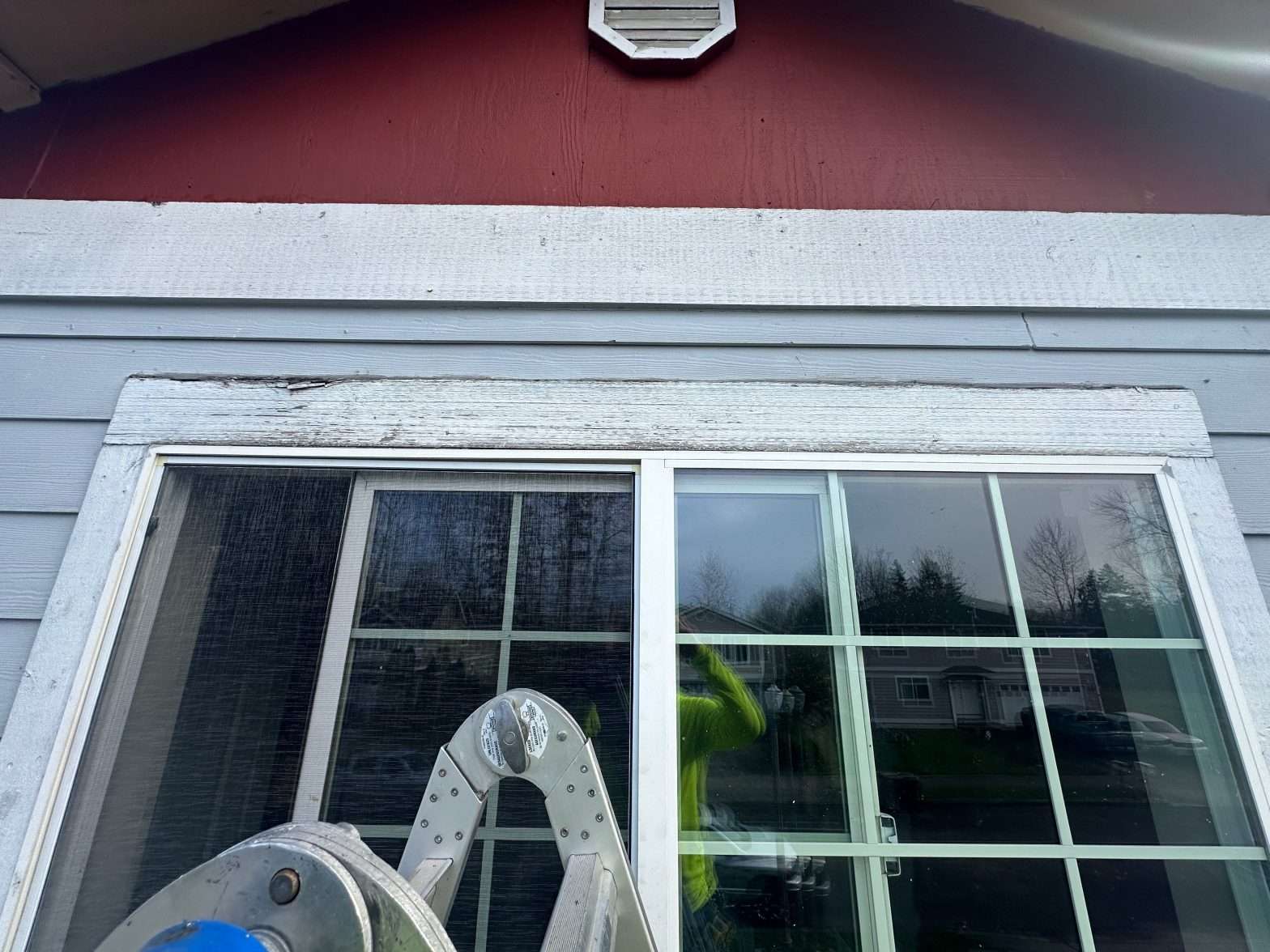
Wood rot repair is one of the most common exterior repair projects in Pacific Northwest homes. In many cases, the damage develops gradually over time as moisture repeatedly reaches exposed wood and never fully dries out.
The most common causes are usually simple: Failed caulking around windows and doors, poor drainage, clogged gutters, cracked paint, or small gaps where water can enter all create opportunities for moisture intrusion. Neglecting regular maintenance often makes the problem worse, allowing dampness to remain trapped inside wood framing or trim season after season.
Homeowners often notice subtle warning signs before any major visible damage. Paint may begin peeling earlier than expected, trim boards may swell or feel soft in certain areas, or small cracks can appear around corners and joints. Some areas might develop a musty smell or begin holding moisture longer than surrounding materials after rainfall, and you may also notice discoloration, movement, or wood around windows and doors that feels slightly spongy when pressed.

These issues tend to first appear in areas that experience repeated moisture exposure, especially around window trim, roof edges, deck connections, siding corners, and lower exterior boards that stay damp longer throughout the year. In homes with older wood materials or years of layered paint and patchwork repairs, it’s not uncommon for moisture damage to remain hidden beneath the surface until the affected area is opened up.
One important distinction is the difference between surface-level deterioration and deeper structural damage. In some cases, the affected material can be repaired by removing and replacing isolated sections before the issue spreads further. But once moisture reaches underlying framing or continues unchecked for too long, larger portions of the structure may need to be rebuilt to properly restore strength and prevent future problems. This is especially common in older homes where layers of previous repairs, aging materials, or long-term moisture exposure may hide the full extent of the damage.
Luckily, wood rot is often much simpler to repair when caught early. Addressing small problem areas before moisture spreads deeper into the structure often keeps repairs simpler, more localized, and less disruptive overall.
Deck Repairs and Structural Wear
Decks in the Pacific Northwest are exposed to a constant cycle of moisture, drying, temperature shifts, and seasonal debris that gradually wears down even well-built structures. Rain rarely damages a deck all at once. Instead, deterioration usually happens gradually through repeated exposure, especially in areas where water lingers, airflow is limited, or materials stay shaded for long stretches of the year. Even pressure-treated lumber eventually begins breaking down when it remains damp too often or cannot fully dry between storms.
Deck damage also tends to develop gradually rather than appearing all at once. Boards may begin cracking or splitting, railings can loosen over time, or certain areas may develop a slight bounce underfoot. Homeowners may also notice soft spots near stairs, discoloration around fasteners, or sections that stay damp noticeably longer than surrounding areas after rainfall.

Moisture buildup beneath the surface is often what causes the most serious long-term problems. Water can collect beneath decking boards, around posts, or near hardware connections where airflow is restricted. Over time, this can lead to deterioration around structural components like joists, stair framing, ledger boards, and railing attachments. In heavily shaded areas or neighborhoods with mature tree coverage, decks may remain damp long after rainfall ends, accelerating wear even further.
At the same time, Pacific Northwest decks also experience stress during the dry season. Summer heat and UV exposure can dry out boards, weaken finishes, and create additional cracking as materials repeatedly expand and contract between wet and dry conditions.
It’s also important to distinguish between cosmetic wear and structural concerns. Surface issues like faded stain or isolated cracked boards may be relatively straightforward to address, while movement, sagging, unstable railings, or deteriorating framing underneath the deck often point to more significant structural problems.
Older deck builds can be especially vulnerable because many were constructed under outdated standards or with materials and connection methods that have not held up well over time. This becomes even more noticeable on elevated decks, hillside builds, and long exterior stair systems, all common throughout Tacoma and surrounding areas, where framing and support components remain heavily exposed to the elements in every season. Covered decks help reduce direct rainfall, but they can still trap humidity and limit airflow in ways that allow moisture to build up gradually over time.
In some cases, targeted deck repair and reinforcement can safely extend the life of an existing structure. In others, partial rebuilding becomes the more practical long-term solution, especially when structural framing or major support components have begun to fail.
Siding and Trim Damage from Moisture Exposure
Siding and trim are commonly the first parts of a home to show signs of long-term moisture exposure in the Pacific Northwest. These materials act as a protective outer layer, constantly exposed to rain, damp air, temperature changes, and seasonal debris. Over time, even small weaknesses can allow water to work its way into areas that were never meant to stay wet.
One of the reasons siding and trim damage spreads so easily is that moisture rarely enters through large openings. More often, it begins with minor gaps around windows, rooflines, corners, joints, or penetrations where caulking has failed or materials have shifted slightly over time. Wind-driven rain, especially during Tacoma’s wetter months, can repeatedly push moisture into these vulnerable areas faster than they are able to dry.
Homeowners may first notice warped trim boards, cracked siding joints, bubbling or peeling paint, or sections that appear swollen after periods of rain. In some cases, soft wood can attract insects or animals looking for easy access points, especially near roof edges, lower siding sections, or damp corners that stay shaded throughout much of the year.

The challenge is that visible exterior damage is often only part of the problem. Once moisture gets behind siding or trim, it can gradually spread into sheathing, framing, or insulation without obvious signs from the outside. That’s why exterior home repair projects are often about more than appearance alone. Addressing damaged areas early helps prevent moisture from continuing deeper into the structure where repairs become more extensive and disruptive.
In many cases, targeted siding repair or trim repair can resolve isolated problem areas before they spread further. Catching those issues early often prevents the need for much more extensive exterior renovation work later on.
Drafty Windows, Doors, and Framing Issues
Drafts around windows and doors are easy to dismiss at first, especially in older Pacific Northwest homes where a little airflow can seem normal. But when drafts become persistent, doors stop closing properly, or trim begins shifting out of place, the issue is often more than just worn weatherstripping or aging hardware.
In many cases, the problem comes from movement in the surrounding framing itself. Homes naturally settle over time, and in areas like Tacoma where many houses have gone through decades of seasonal moisture exposure, those small shifts can gradually affect how doors and windows sit within their openings. Moisture intrusion can also cause nearby wood materials to swell, soften, or distort, which adds additional stress to already aging framing.
Homeowners commonly notice signs like sticking doors, visible gaps near trim, uneven flooring around entry points, drafts near windows, or water stains forming nearby after heavy rain. In some homes, windows may become harder to open, while doors begin rubbing against floors or drifting out of alignment as the surrounding structure slowly shifts.
One of the challenges with these types of issues is that replacing the window or door itself does not always solve the underlying problem. If the surrounding framing has moved, weakened, or deteriorated from moisture exposure, the opening may need to be reinforced, reframed, or realigned so the new installation performs correctly long-term.
These types of repairs can also simultaneously improve weather resistance and energy efficiency. Proper sealing, framing adjustments, and reinforcement help reduce drafts while also limiting opportunities for moisture intrusion around vulnerable openings.
Older homes throughout Tacoma and the Pacific Northwest commonly experience this kind of slow structural shifting. Catching these issues early often keeps repairs more localized before movement begins affecting surrounding walls, flooring, or exterior materials.
Ventilation and Moisture Problems Inside the Home
Not all moisture problems start outside the home. In many Pacific Northwest houses, excess moisture builds up indoors because humid air has nowhere to go. Over time, poor airflow can create lingering dampness that affects comfort, indoor air quality, and even the condition of surrounding materials.
Bathrooms, basements, kitchens, and laundry areas tend to experience the biggest problems because they naturally generate more humidity through cooking, showering, washing, and daily use. When ventilation is limited or outdated, moisture gets trapped indoors instead of being properly exhausted outside.
Homeowners often notice the symptoms gradually. Windows may collect condensation during colder months, paint can begin peeling around ceilings or trim, and certain rooms may constantly feel damp, muggy, or colder than the rest of the house. In some cases, musty smells or visible mold and mildew begin appearing in corners, around vents, or near ceilings where moisture repeatedly collects.

Older homes throughout Tacoma and the surrounding region frequently struggle with these issues because many were built before modern ventilation standards became common. Bathrooms may rely on undersized fans or no mechanical ventilation at all, while basements and laundry spaces were rarely designed with long-term moisture control in mind. Even kitchens can develop ventilation problems when range hoods are outdated, improperly vented, or unable to keep up with modern cooking habits.
One of the challenges with indoor moisture problems is that they often affect more than comfort alone. Excess humidity can contribute to swelling wood, peeling finishes, lingering odors, and gradual deterioration around walls, ceilings, windows, and cabinetry. Moisture trapped indoors can also make heating and cooling systems work harder while making rooms feel uncomfortable year-round.
The good news is that improving airflow does not always require a major renovation. Bathroom ventilation repair, upgraded exhaust systems, improved airflow pathways, insulation adjustments, and targeted moisture-control improvements can often make a noticeable difference in how a home feels and performs. These projects are typically smaller in scope than a full remodel, but they still benefit from proper planning and installation to ensure moisture is being managed effectively rather than simply moved around the house.
Minor Layout and Structural Adjustments That Improve Function
Not every home improvement project needs to become a full remodel to make a noticeable impact. In many Pacific Northwest homes, smaller structural adjustments and targeted renovation and repair projects can dramatically improve how a space feels and functions without completely rebuilding the room.
Older homes were often built around priorities that no longer match how people use their spaces today. Narrow walkways, awkward transitions between rooms, undersized storage areas, and cramped floor plans can make spaces feel more restrictive than they need to be, even when the home itself has plenty of potential.
Some of the most effective improvements are surprisingly focused. Removing a small non-load-bearing wall section can open up sightlines and improve movement between rooms. Reworking an awkward pantry or storage nook may create more usable space without changing the room’s footprint, while framing adjustments or rebuilding damaged subfloor sections can correct soft spots, uneven transitions, or layout limitations that have developed over time.
These kinds of upgrades are often tied to larger usability concerns throughout the home. Kitchen layout improvements may involve opening tight walkways or improving transitions into dining areas. Bathrooms sometimes need layout adjustments to improve clearance or create more practical storage. Basements frequently require reframing or strategic layout changes to make the space more practical and comfortable to use regularly.
One of the advantages of these smaller renovation and repair services is that they can address long-standing frustrations without requiring a full-scale remodel. Instead of completely reinventing a space, the focus is often on identifying the areas that interrupt flow, limit functionality, or make the home feel harder to use day to day.
In many cases, these targeted improvements become the middle ground between a simple repair and a major renovation, allowing homeowners to improve comfort and usability while working within the structure they already have.
Do you believe your home is in need of some maintenance?
Check out our repairs and renovations page for more information about our services.
When Small Problems Become Bigger Repairs
One of the most common reasons repair projects become more elaborate and expensive over time is that many issues remain manageable for a while before they become urgent. A deck may still feel mostly solid even with early framing deterioration. A drafty window may only be noticeable during colder months. Peeling paint or a soft trim board might only seem cosmetic at first glance. Because the home is still technically functioning, it’s easy to fall into the mindset of, “It still works, so it can wait.”
The challenge in Pacific Northwest homes is that moisture-related problems rarely stay isolated for long. Once water begins getting into framing, trim, decking, or wall cavities, the damage often spreads gradually behind the surface long before it becomes fully visible. Multiple wet seasons can accelerate that process, especially in shaded areas or parts of the home that already struggle to dry properly throughout the year.
That does not mean every issue requires immediate major work, and it’s important not to approach repairs from a fear-based perspective. In many cases, smaller targeted repairs are enough to stop the problem and avoid more invasive construction later. The key is understanding how a repair can actively protect the surrounding structure rather than simply improve appearance.
For example, replacing a damaged section of trim is usually far simpler than rebuilding framing that has absorbed moisture for years behind the wall. Reinforcing aging deck components early may extend the life of the structure and prevent larger sections from needing replacement. Improving ventilation in a bathroom or basement can also help prevent long-term moisture buildup before it begins affecting surrounding materials and finishes.
This is one of the reasons preventative repairs matter so much in the Pacific Northwest. Addressing smaller issues before they spread often keeps projects more localized, more affordable, and far less disruptive than waiting until multiple systems or structural components are affected.
Signs It’s Time to Call a Professional
Some home repairs are manageable DIY projects, especially when they involve simple maintenance or straightforward cosmetic fixes. But when problems involve moisture, structural movement, framing, or recurring damage, it often takes a more experienced approach to identify what’s actually causing the issue and how to prevent it from returning.
One of the biggest signs it may be time to call a professional is when the problem keeps coming back. Repainting the same peeling area every year, tightening the same loose railing repeatedly, or constantly dealing with moisture around a window or door usually points to a larger underlying issue rather than a surface-level fix.
Structural concerns are another important indicator. Sagging deck sections, soft subfloor areas, shifting framing, widening cracks, or doors and windows that continue moving out of alignment can all suggest that moisture, settling, or deterioration is affecting the structure itself rather than just the finish materials around it.
Exterior repairs tied to drainage or water intrusion also tend to require a broader evaluation. In many Pacific Northwest homes, the visible damage is only one part of the problem. Water may be entering through roofing transitions, siding gaps, flashing failures, clogged drainage paths, or poorly ventilated areas that are difficult to identify without opening things up and tracing the source.
Projects that involve multiple systems working together often benefit from contractor-level planning as well. For example, repairing rot around a window may involve trim replacement, framing repair, moisture sealing, siding adjustments, and repainting once the structure is properly restored. Deck repairs can also extend beyond replacing boards if structural framing, stairs, hardware connections, or drainage conditions underneath the deck are contributing to the problem.
Addressing these kinds of issues early is often what prevents larger structural repairs or renovation work later on. In most cases, the goal is not to completely rebuild the space, but to correct the underlying problem before moisture, movement, or deterioration spreads further into the home. A well-planned repair should solve the issue thoroughly while keeping the scope as focused and manageable as possible.
Repair and Renovation Services for Tacoma & Pacific Northwest Homes
Many home repair issues in the Pacific Northwest develop gradually. What starts as a loose railing, soft trim board, recurring moisture spot, or draft around a window can slowly spread into larger structural or exterior problems over time if the underlying cause is never addressed.
At Betterly Construction, we help Tacoma-area homeowners handle these types of projects before they turn into larger and more disruptive repairs. Our work includes home renovations and repairs, deck and fence work, kitchen and bathroom upgrades, framing repairs, moisture-related issues, and other targeted improvements that fall somewhere between a basic handyman task and a full remodel.
The goal is not to overcomplicate repairs, but to solve the problem correctly while improving how the home functions long term.
If you’ve started noticing signs of wear, moisture damage, movement, or aging materials around your home, now is a good time to start the conversation before those issues spread further.
Home Repairs Before Selling: What Adds the Most Value?
Preparing your home for sale can feel overwhelming, especially when you’re trying to decide wh…
How to Choose the Best Flooring for Your Home
Choosing the best flooring for your home is about more than simply finding a material you like the l…
What Is the Best Countertop Material? Comparing Quartz, Quartzite, Granite, Butcher Block, and More
Countertops are one of the most important material decisions in a remodel, especially in the kitchen…
The Best Home Improvements for Resale in Tacoma, WA: What to Fix Before Listing Your Home
The best home improvements for resale are not always the biggest or most expensive projects. In many…
Wood vs. Composite Decking: How to Make the Right Choice for Your Pacific Northwest Home
Building a new deck is one of the most impactful ways to expand your living space and enjoy more of …
The Most Common Home Repairs in Pacific Northwest Homes (and How to Know When It’s Time to Tackle Them)
Home repairs in the Pacific Northwest are often shaped by the region’s constant exposure to moisture…