

Building a new deck is one of the most impactful ways to expand your living space and enjoy more of your property. Early in the planning process, one of the biggest decisions homeowners face is choosing the right decking material. That choice influences everything from appearance and maintenance requirements to long-term durability and overall project cost.
For homeowners in the Pacific Northwest, that decision deserves extra consideration. Rain, moisture, moss, shade, and seasonal weather patterns all affect how decking materials perform over time. A deck is a long-term investment, so understanding how different materials respond to these conditions can help you make a choice that fits both your home and your expectations.
There isn’t a single decking material that’s right for every homeowner. Some people prioritize the natural appearance and character of wood, while others prefer the lower maintenance requirements of composite decking. Budget, long-term ownership plans, maintenance preferences, and aesthetic goals all play a role in determining which option makes the most sense.
In many Tacoma-area neighborhoods, cedar remains a popular choice because of its natural beauty and strong connection to Pacific Northwest architecture. At the same time, composite decking has become increasingly common among homeowners looking for a durable, low-maintenance alternative. Both can be excellent choices when properly installed and maintained.
This guide compares the advantages, drawbacks, costs, maintenance requirements, and long-term value of wood vs composite decking in the Pacific Northwest climate. By the end, you’ll have a clearer understanding of which material is the better fit for your home, lifestyle, and outdoor living goals.
Why Deck Material Matters in the Pacific Northwest
The Pacific Northwest presents a demanding environment for outdoor structures. Decks spend much of the year exposed to rain, damp air, shade, and fluctuating temperatures, followed by stretches of summer sun that can dry out finishes and warm the surface. Together, these conditions influence how materials weather, expand, contract, and hold up season after season.
Moisture is often the biggest factor affecting the gradual deterioration of a deck. Even after a storm passes, decks may stay damp for days depending on sun exposure, airflow, and surrounding vegetation. In neighborhoods with mature trees, limited sunlight can further slow drying and create conditions that encourage moss, mildew, and long-term moisture retention.
Seasonal changes also play a role. During the wet months, decking materials absorb moisture and expand. As temperatures rise and conditions dry out during the summer, those same materials contract. This cycle repeats year after year and can contribute to cracking, splitting, loose fasteners, surface wear, and other signs of aging.
Many Tacoma-area homes also feature elevated decks, hillside installations, covered outdoor spaces, and large trees that create unique moisture and drainage conditions. These conditions can affect how quickly a deck shows wear and how much maintenance it needs to stay safe, attractive, and usable.
This is why choosing a decking material should consider more than just appearance. Maintenance expectations, durability, moisture resistance, longevity, and long-term ownership costs all become important considerations when planning a deck that will continue performing well for years to come.
This is where the differences between wood and composite decking begin to matter. Both can be excellent choices for Pacific Northwest homes, but each comes with its own strengths, limitations, and maintenance requirements.
Cedar Decking: The Pacific Northwest Classic
For generations, cedar decking has been a natural choice for Pacific Northwest homes. From Tacoma Craftsman houses to newer homes looking to add warmth and character outdoors, cedar remains one of the most recognizable and widely used decking materials in the region.
Part of its appeal comes from how well it complements the surrounding environment. Cedar’s natural grain patterns, rich color variations, and authentic wood appearance fit comfortably alongside the forests, landscapes, and architectural styles that define much of Western Washington. While newer decking products have become increasingly popular, cedar continues to be a material many homeowners specifically request because of its traditional look and feel.
Why Cedar Remains Popular
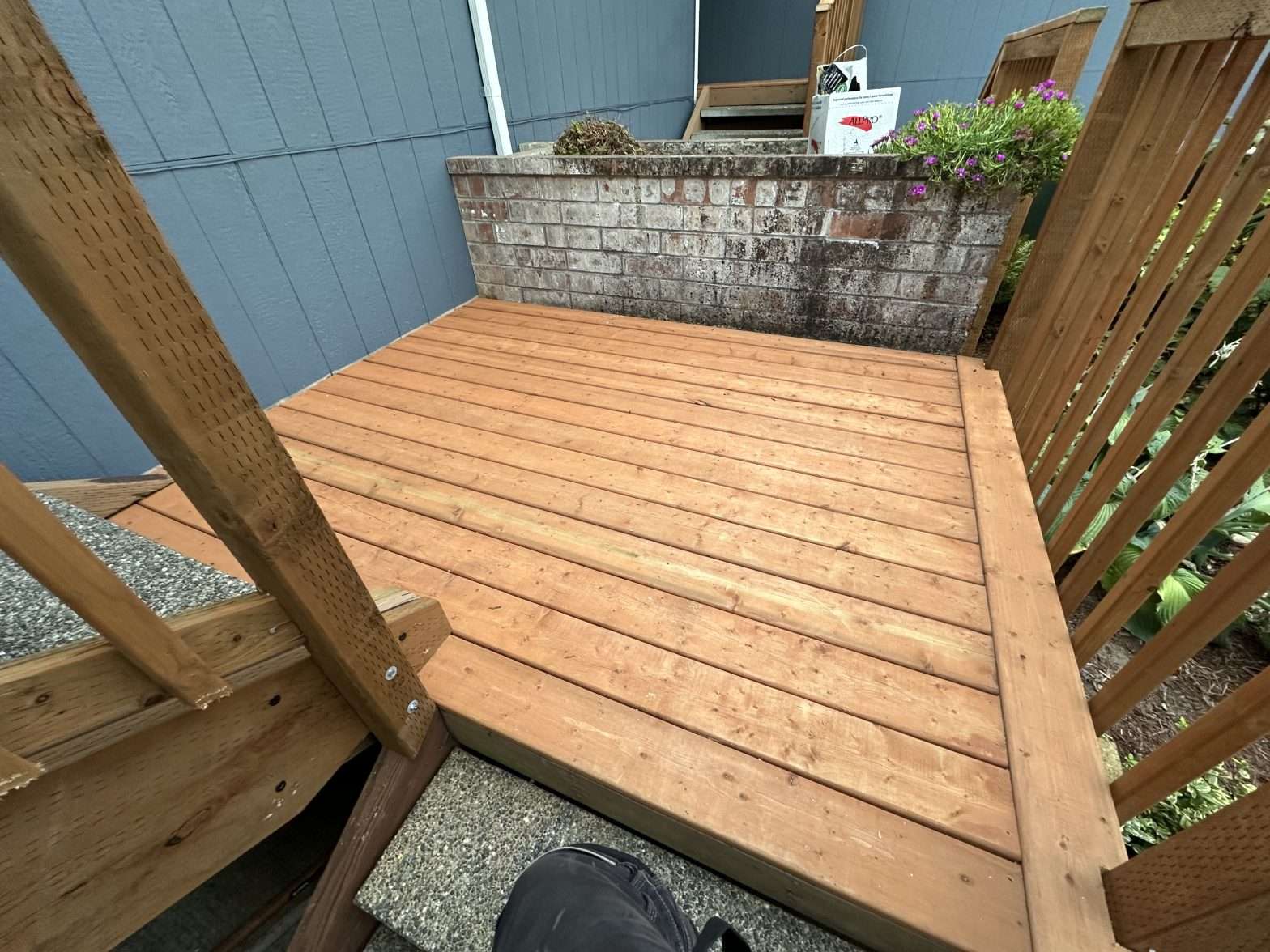
One of cedar’s biggest strengths is its natural character. No two boards look exactly alike, giving each deck a unique character that many homeowners find difficult to replicate with manufactured materials. Cedar also accepts stains and finishes well, making it easier to customize the final appearance while preserving the natural wood grain.
Cedar tends to remain cooler under direct sunlight than many composite products, which can make it more comfortable for bare feet during the warmer months. While summer temperatures in the Pacific Northwest are generally moderate, surface temperature can still become noticeable on decks with large areas of direct afternoon sun.

One of cedar’s biggest strengths is its natural character. No two boards look exactly alike, giving each deck a unique character that many homeowners find difficult to replicate with manufactured materials. Cedar also accepts stains and finishes well, making it easier to customize the final appearance while preserving the natural wood grain.
Cedar tends to remain cooler under direct sunlight than many composite products, which can make it more comfortable for bare feet during the warmer months. While summer temperatures in the Pacific Northwest are generally moderate, surface temperature can still become noticeable on decks with large areas of direct afternoon sun.
Another advantage is flexibility. Cedar is relatively easy to cut, modify, and repair compared to many manufactured decking products. If a board becomes damaged, individual pieces can often be replaced without affecting the surrounding deck. This can make future repairs and alterations more straightforward.
Because cedar is readily available throughout the Pacific Northwest, it has also remained a practical and familiar option for homeowners, builders, and suppliers throughout the region.
Potential Drawbacks of Cedar
Like any natural wood product, cedar requires ongoing maintenance to perform well over the long term. Without regular care, exposure to moisture, sunlight, and changing weather conditions can gradually affect both its appearance and durability.
Although cedar contains natural compounds that help resist insects and decay, it is not immune to moisture-related problems. Moss, mildew, and surface algae can develop in shaded areas, particularly where debris and moisture are allowed to accumulate. If maintenance is deferred for too long, cedar can eventually crack, split, warp, or develop areas of rot.
Over time, cedar will also naturally weather to a gray color if left untreated. While some homeowners appreciate this look, others prefer to maintain the original color through staining or sealing. Uneven sun exposure, shade, and moisture can also cause boards to weather at different rates across the same deck.
For homeowners who love the look of real wood, these tradeoffs are often worth it. For those who want a deck that needs very little upkeep, these tradeoffs may be reasons to consider another material.
What Homeowners Should Expect from a Cedar Deck
A cedar deck performs best when it receives periodic care and attention. Most homeowners should plan on regular debris removal, occasional washing to remove dirt and organic growth, and periodic staining or sealing to help protect the wood from moisture and UV exposure. The exact schedule varies depending on sun exposure, tree coverage, and how much weather the deck receives throughout the year.
When properly built and maintained, a cedar deck can provide decades of service. Factors such as drainage, ventilation, framing quality, and maintenance habits often have as much influence on longevity as the decking boards themselves.
Cedar is often a good fit for homeowners who value natural materials, appreciate the character that comes with real wood, and are comfortable investing some time and effort into ongoing maintenance. For many Pacific Northwest homeowners, that balance of appearance, performance, and regional character continues to make cedar one of the most appealing decking options available.
Pressure-Treated Lumber:
The Budget-Friendly Alternative
While cedar and composite decking tend to receive most of the attention, pressure-treated wood decking remains one of the most widely used decking materials in North America. For homeowners focused on affordability and practicality, it can be an effective option that provides many of the same functional benefits as other decking materials at a lower initial cost.
Pressure-treated lumber is made by infusing wood with preservatives designed to help resist rot, insects, and moisture-related deterioration. This treatment process allows the material to perform much better outdoors than untreated lumber, making it a common choice for deck framing and, in some cases, the decking surface itself.
One of the biggest advantages of pressure-treated decking is cost. Compared to cedar and most composite products, it typically offers the lowest upfront material cost, which can make larger decks or more complex projects more attainable for homeowners working within a specific budget.
Another benefit is availability. Pressure-treated lumber is readily available throughout the Pacific Northwest and can be stained or painted to achieve a variety of appearances. Homeowners who prefer a customized look often choose to apply stains that mimic the appearance of cedar or other wood species.
That said, pressure-treated lumber does come with tradeoffs. While it is durable and functional, many homeowners find it less visually appealing than cedar’s natural grain and color variation. It is also more prone to shrinking, warping, twisting, and surface cracking as it dries and ages, particularly during seasonal moisture and temperature changes.
Like cedar, pressure-treated decking requires ongoing maintenance. Regular cleaning and periodic staining or sealing help extend its lifespan and maintain its appearance. Without proper maintenance, weathering, moisture exposure, and surface deterioration can gradually affect both performance and aesthetics.
For many Pacific Northwest homeowners, pressure-treated lumber is best understood as a budget-conscious option. It offers a lower-cost entry point for new deck construction while still providing the durability needed for outdoor use. Homeowners who prioritize appearance often gravitate toward cedar, while those seeking minimal maintenance may lean toward composite. However, for those focused primarily on budget and functionality, pressure-treated lumber remains a viable option worth considering.
Composite Decking: Built for Low Maintenance
Composite decking has become increasingly common for homeowners who want an outdoor space with fewer maintenance demands. In the Pacific Northwest, where decks are exposed to rain, shade, organic debris, and seasonal moisture for much of the year, that lower-maintenance promise carries real weight.
Unlike natural wood, composite decking is manufactured from a blend of wood fibers and recycled plastics or other synthetic materials. While products vary by manufacturer, most are designed to reduce many of the maintenance concerns traditionally associated with wood decking while still providing the appearance of a finished deck surface.
Why Composite Has Become So Popular
For many homeowners, the biggest advantage of composite decking is the reduced maintenance. Composite boards do not require regular staining, sealing, or painting, which eliminates one of the most time-consuming aspects of deck ownership. Routine cleaning is still important, but ongoing maintenance tends to be much simpler than with natural wood.
Moisture resistance is another major selling point in the Pacific Northwest. While no decking material is completely immune to the effects of weather, composite boards are generally less susceptible to rot, splitting, and insect damage because they do not absorb moisture in the same way wood does. This can be particularly attractive for homeowners dealing with persistent moisture, limited airflow, or outdoor spaces that stay damp long after rainfall.
Many homeowners also appreciate the consistent appearance of composite decking. Boards are manufactured to maintain a uniform color and texture, creating a cleaner, more predictable look across the entire deck. For those who prefer a finished appearance without the natural variation found in wood, this consistency can be a significant benefit.
Composite decking is also known for its longevity. Many products are designed to provide decades of service when properly installed, making them appealing to homeowners who want to minimize future maintenance and replacement concerns.
Potential Drawbacks of Composite
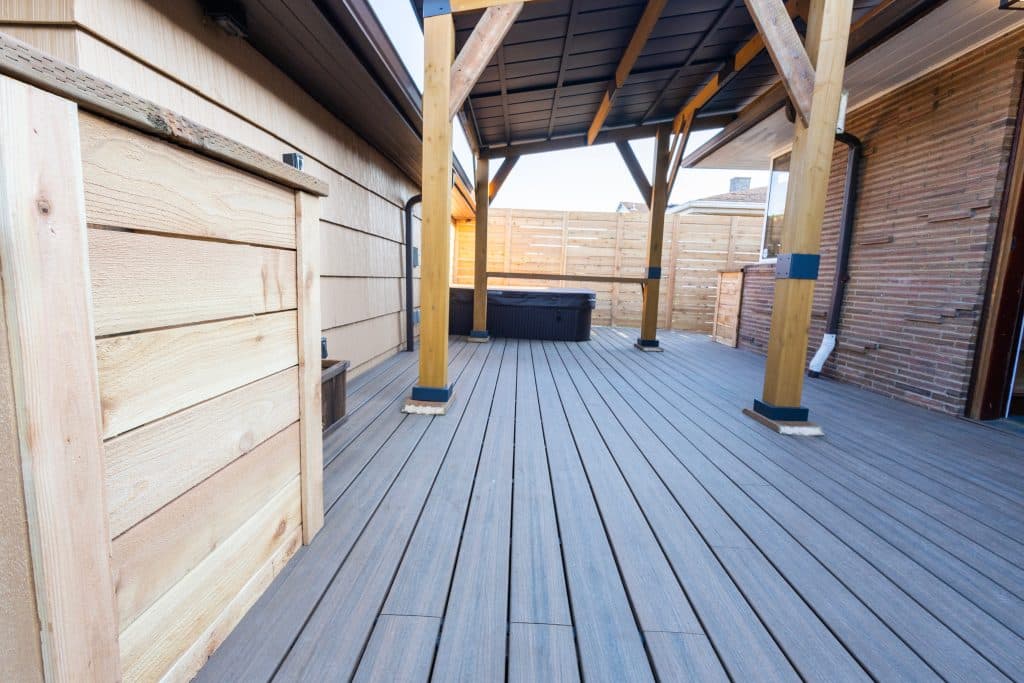
The biggest drawback for most homeowners is cost. Composite decking typically requires a larger upfront investment than cedar or pressure-treated lumber, which can have a significant impact on the overall project budget.
Appearance can also be subjective. While composite products have improved dramatically over the years, some homeowners still prefer the natural grain patterns, texture, and character of real wood. While many premium composite products closely mimic the look of wood, they still tend to appear more consistent and less varied than natural cedar.
Surface temperature is another consideration. During periods of direct summer sun, some composite products can become noticeably warmer underfoot than natural wood. This is often most noticeable on south- and west-facing decks with little shade, making color selection and sun exposure worth considering during the planning process.
Repairs can also be more complicated. Individual boards can usually be replaced if damaged, but matching colors and product lines years later may not always be straightforward. With wood, repairs often involve replacing a board and refinishing the area. Composite repairs sometimes require more planning, particularly if the original product has been discontinued.
What Homeowners Should Expect from Composite Decking
Composite decking makes the most sense for homeowners who want a deck that stays relatively easy to care for year after year. Most maintenance consists of periodic cleaning to remove dirt, debris, pollen, and organic buildup that can accumulate throughout the year.
When properly installed, composite decking can provide a very long service life. Factors such as drainage, ventilation, framing quality, and overall construction still play an important role, but the decking surface itself generally requires less intervention over time than natural wood.
Composite is often the best fit for homeowners who prioritize convenience, long-term durability, and predictable maintenance costs. While the initial investment is typically higher, many people find the tradeoff worthwhile because of the reduced upkeep and extended lifespan. For homeowners planning to stay in their home for many years, composite decking is often viewed as a long-term investment rather than simply a building material choice.
Cedar vs Composite: Side-by-Side Comparison
| Category | Cedar Decking | Composite Decking |
| Upfront Cost | Lower | Higher |
| Maintenance | Regular cleaning, staining, and sealing | Periodic cleaning only |
| Appearance | Natural wood grain and unique character | Consistent color and texture |
| Moisture Resistance | Good when maintained | Excellent |
| Repairability | Individual boards are easy to replace | Repairs can be more complex |
| Surface Temperature | Generally stays cooler in direct sun | Can become warmer in full sun |
| Lifespan | Decades with proper maintenance | Decades with minimal maintenance |
| Availability | Readily available throughout the Pacific Northwest | Widely available through suppliers and manufacturers |
| Customization | Easy to modify, stain, or refinish | Limited to manufacturer colors and finishes |
| Long-Term Upkeep | Higher | Lower |
| Best For | Homeowners who value natural wood and don’t mind maintenance | Homeowners who prioritize convenience and long-term durability |
Key Takeaway
Neither material is objectively better for every situation. Cedar offers the warmth, character, and authenticity of real wood, while composite provides lower maintenance and greater resistance to moisture-related wear. The best choice depends on your budget, maintenance expectations, aesthetic preferences, and how long you plan to stay in the home.
What Determines Deck Lifespan in the Pacific Northwest?
When homeowners ask about the longest-lasting decking material, the answer is usually more complicated than simply choosing cedar or composite. While the decking surface itself certainly matters, many of the factors that determine a deck’s lifespan are hidden beneath the boards.
Proper drainage is one of the most important. Decks that allow water to drain away efficiently tend to experience fewer moisture-related problems over time. When water becomes trapped around framing, fasteners, posts, or connections, deterioration can occur regardless of which decking material is installed on top.
Ventilation is equally important. Areas beneath the deck need enough airflow to help materials dry after rain and periods of high humidity. This is particularly relevant in the Pacific Northwest, where decks may remain damp for extended periods during the fall and winter months. Limited airflow can accelerate wear on both decking surfaces and structural framing.
Tree coverage, shade, and surrounding landscaping can also influence longevity. While mature trees provide privacy and character, they can reduce sunlight and slow drying after storms. Debris accumulation, moss growth, and persistent moisture often become more significant maintenance concerns in heavily shaded areas.
Maintenance habits play a role as well. Cedar requires periodic cleaning, staining, and sealing to achieve its maximum lifespan, while composite benefits from routine cleaning that prevents dirt, debris, and organic buildup from accumulating on the surface. Neither material performs its best when neglected.
Perhaps most importantly, the quality of the original construction often determines how well a deck holds up over time. Proper framing, flashing, drainage planning, fastener selection, and attention to structural details all contribute to the long-term performance of the deck, regardless of the material chosen for the surface.
For that reason, the longest-lasting decking material is not always the one with the most impressive product warranty. In many cases, a well-designed, properly built deck will outlast a poorly constructed one, even if both use high-quality materials. Choosing the right decking material is important, but making sure the deck is built correctly from the start is just as critical to its long-term success.
Cost, Lifespan, and Long-Term Value
By this point, it should be clear that both cedar and composite decking can perform well in the Pacific Northwest when properly installed and maintained. The bigger question for many homeowners is how those materials fit into their budget, maintenance expectations, and long-term plans for the property. While upfront cost often gets the most attention, the overall value of a deck is shaped by several factors, including maintenance requirements, expected lifespan, repair needs, and how long you plan to own the home. Looking at the full picture can make it easier to decide which material offers the best fit for your goals.
Initial Cost
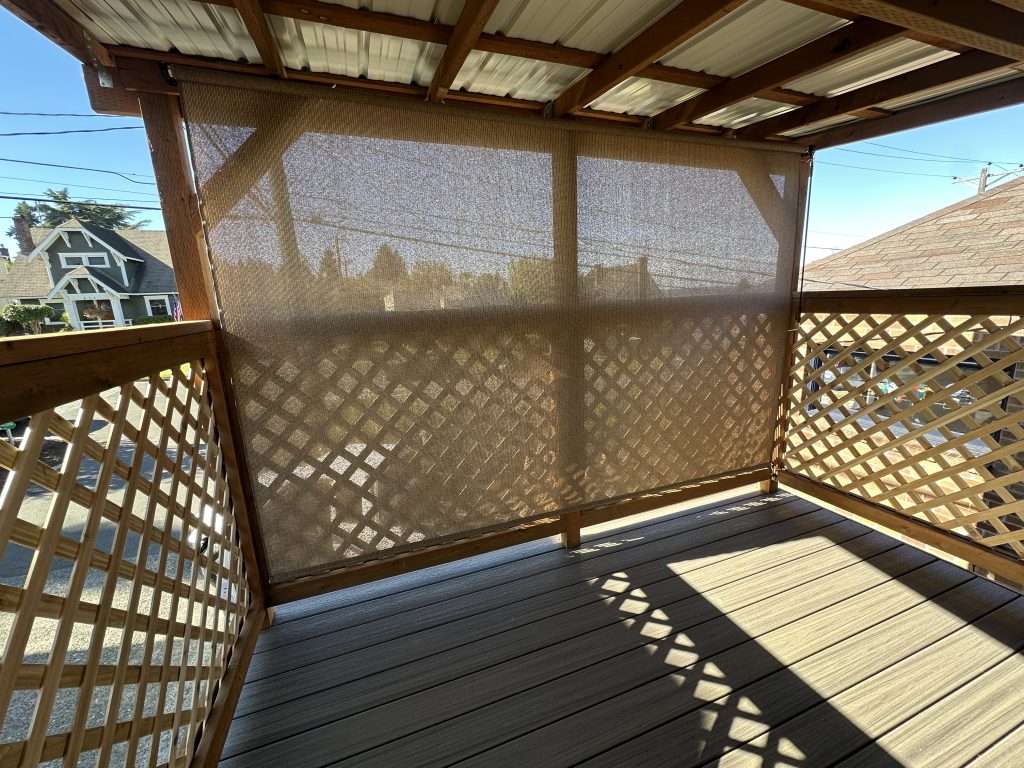
For many homeowners, budget is the first factor that narrows the decision. In most cases, pressure-treated lumber has the lowest upfront cost, cedar falls somewhere in the middle, and composite decking requires the largest initial investment.
The difference can become especially noticeable on larger decks, elevated structures, or projects that include custom railings, stairs, built-in seating, or covered areas. While the decking surface is only one part of the overall project cost, material selection can still have a significant impact on the final budget.
For homeowners focused on keeping upfront costs lower, wood decking often provides more flexibility. For those willing to invest more initially, composite may offer benefits that become more apparent over time.
Maintenance Requirements
One of the biggest differences between cedar and composite appears after the deck is built.
A cedar deck requires periodic cleaning, staining, and sealing to help protect the wood from moisture, sunlight, and everyday wear. The exact schedule depends on weather exposure, tree coverage, and homeowner preferences, but maintenance should be viewed as an ongoing part of owning a wood deck.
Composite decking greatly reduces those maintenance requirements. Most homeowners can maintain their deck through routine cleaning and occasional washing without the need for staining, sealing, or refinishing.
Neither material is completely maintenance-free, but the amount of time and effort required throughout the life of the deck can differ substantially.
Expected Lifespan
When properly built and maintained, both cedar and composite decks can provide decades of service.
Composite generally offers a longer potential lifespan because it is less susceptible to many of the moisture-related issues that affect natural wood. Cedar, however, can also remain attractive and functional for many years when it receives consistent care and attention.
As discussed earlier, lifespan depends on more than the decking surface alone. Proper framing, drainage, ventilation, flashing, and construction practices often play just as large a role in determining how long a deck lasts.
Long-Term Ownership Costs
The true cost of a deck extends well beyond the initial installation.
Wood decks typically require ongoing investments in maintenance products, periodic refinishing, and occasional board replacement as individual components age. These costs are often spread out over many years, making them less noticeable than the initial construction expense.
Composite decks generally shift more of the investment to the beginning of the project. While repairs and cleaning still occur, homeowners usually spend less on routine maintenance throughout the deck’s lifespan.
This is why comparing decking materials solely by upfront cost can be misleading. The more useful question is often how much time, effort, and money you’re comfortable investing over the next ten, fifteen, or twenty years.
Which Offers Better Value?
The answer depends less on the material itself and more on the homeowner’s priorities.
For some homeowners, cedar offers tremendous value because they enjoy the natural appearance of real wood and don’t mind periodic maintenance. The lower initial cost can also make larger or more customized projects more attainable.
For others, composite provides better long-term value because it reduces maintenance responsibilities and offers greater predictability over time. Homeowners planning to stay in their home for many years often appreciate the convenience that comes with a lower-maintenance deck.
Rather than asking which material is universally better, it may be more helpful to ask which material aligns best with how you plan to use, maintain, and enjoy your outdoor space. The right answer is often different from one homeowner to the next.
Building a Deck That Lasts in Tacoma’s Climate
Choosing the right decking material is important, but it is only one part of what determines how a deck performs over the long term. In many cases, the structural components hidden beneath the surface have a greater impact on durability than the decking boards themselves.
A well-built deck starts with proper framing. The joists, beams, posts, and connections that support the deck must be designed to handle both the intended load and the environmental conditions they will face over time. Even the most durable decking material can develop problems if the underlying structure is not built correctly.
Moisture management is equally important in the Pacific Northwest. Proper flashing helps prevent water from entering where the deck attaches to the home, while thoughtful drainage and ventilation allow framing materials to dry between storms. Without these details, moisture can become trapped in areas that are difficult to see, increasing the risk of rot and structural deterioration over time.
Fasteners and hardware also play a larger role than many homeowners realize. Screws, connectors, brackets, and other hardware are constantly exposed to moisture and changing weather conditions. Using products designed for exterior applications helps reduce corrosion and contributes to the long-term stability of the structure.
Certain deck designs can require additional planning as well. Elevated decks, hillside installations, long stair systems, and covered outdoor spaces all create unique structural and drainage considerations. These features can add tremendous value and usability to a property, but they also increase the importance of proper design and construction practices.
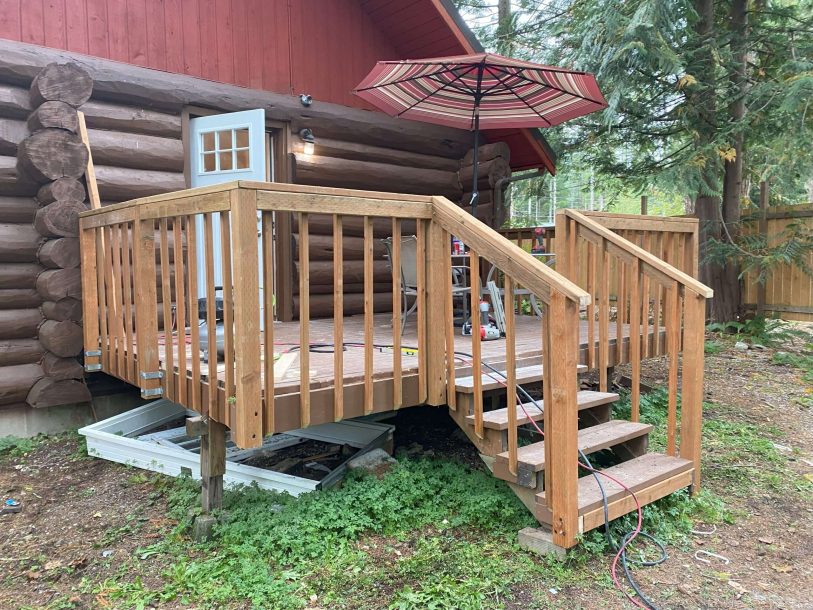
This is one reason two decks built from the same material can perform very differently over time. Quality construction, proper moisture management, and attention to structural details often have just as much influence on longevity as the choice between cedar and composite decking.
When planning a new deck or deck replacement project, it helps to think beyond the visible surface. The most successful decks combine the right material with thoughtful design, durable construction methods, and details that account for the realities of the Pacific Northwest climate.
Planning a New Deck or Deck Replacement Project
After comparing cedar, pressure-treated lumber, and composite decking, one thing becomes clear: there is no single material that is right for every home. The best choice depends on how you plan to use the space, how much maintenance you’re comfortable with, your budget, and your long-term goals for the property.
For some homeowners, the natural beauty and character of cedar make it well worth the ongoing maintenance. Others prefer the convenience and durability of composite decking, while some find that pressure-treated lumber provides the right balance of performance and affordability. Each material has advantages, and each can perform well when paired with quality construction and proper maintenance.
The Pacific Northwest climate should also be part of the decision-making process. Rain, moisture, shade, and seasonal weather patterns all influence how a deck ages over time. Choosing a material that aligns with both your preferences and your property’s conditions can help you get more value from your investment for years to come.
If you’re planning a new deck, replacing an aging structure, or weighing different material options, it often helps to discuss the project with an experienced contractor before making a final decision. An experienced deck builder can help evaluate your site conditions, explain the pros and cons of different materials, and recommend solutions that fit your goals and budget.
At Betterly Construction, we build and rebuild decks throughout Tacoma and the surrounding area, including elevated decks, covered outdoor living spaces, privacy-focused designs, and custom structures tailored to the property. If you’re ready to start planning your project, explore our deck and fence services, browse our project gallery, or contact us to discuss your ideas and options.
Check Out Our Other Blogs for More Home Remodeling and Renovation Insights
How to Choose the Best Flooring for Your Home
Choosing the best flooring for your home is about more than simply finding a material you like the l…
What Is the Best Countertop Material? Comparing Quartz, Quartzite, Granite, Butcher Block, and More
Countertops are one of the most important material decisions in a remodel, especially in the kitchen…
The Best Home Improvements for Resale in Tacoma, WA: What to Fix Before Listing Your Home
The best home improvements for resale are not always the biggest or most expensive projects. In many…
Wood vs. Composite Decking: How to Make the Right Choice for Your Pacific Northwest Home
Building a new deck is one of the most impactful ways to expand your living space and enjoy more of …
The Most Common Home Repairs in Pacific Northwest Homes (and How to Know When It’s Time to Tackle Them)
Home repairs in the Pacific Northwest are often shaped by the region’s constant exposure to moisture…
Kitchen Layout Guide: Creating the Best Kitchen Layout for Your Home
When homeowners start planning a kitchen renovation in Tacoma, it’s easy to focus on the visible upg…