
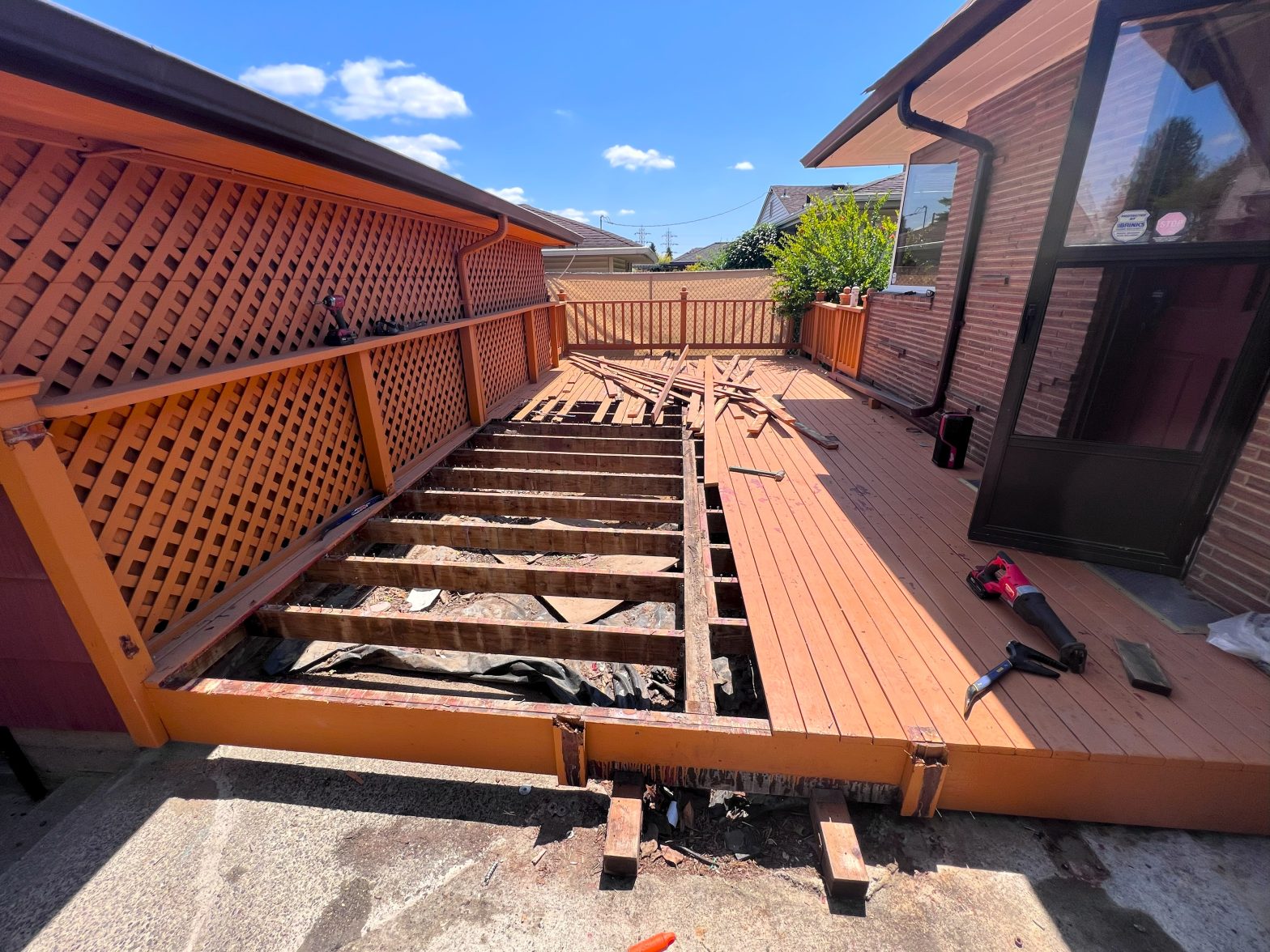
After a long, wet winter, spring has finally arrived in the South Sound, and with it comes longer days, warmer temperatures, and a closer look at what winter may have left behind. For many Tacoma homeowners, one area that tends to reveal the most wear and tear is the backyard deck.
Your deck has likely taken on more wear and debris than you might realize. And even as the weather starts to warm up, those alternating rainy and sunny days can continue to affect the condition of your outdoor space. While it’s tempting to throw down a few outdoor cushions and call it good, giving your deck a proper once-over this time of year can save you money (and headaches) down the road.
A lot of homeowners wait until they’re ready to start using their deck regularly to take a closer look, but that’s often when problems show up. Loose boards, soft spots, or structural issues tend to reveal themselves at the worst possible time.
So, how do you know if your deck is ready for another season of grilling, gathering, and relaxing? This quick spring deck tune-up is designed to help you get ahead of that. You can start it in about 20 minutes, and what you find will help you decide if your deck just needs a simple cleaning, or if it’s time to consider repairs or a larger upgrade.
Let’s walk through it together.
The Tacoma Factor:
What PNW Weather Means for Your Deck
Decks in the Pacific Northwest go through a lot during the winter. Between steady rainfall, occasional snow, damp air, and those rare sun breaks, your outdoor structures are constantly expanding, contracting, absorbing moisture and gradually breaking down.
Even pressure-treated lumber and composite materials aren’t immune to the region’s unique combination of wet weather and slow-drying conditions. In Tacoma especially, moss and mildew buildup are common issues, and wood rot can sneak in faster than you might expect.
The result? By the time spring hits, your deck may be hiding structural damage, slippery surfaces, or unstable rails and stairs—none of which are problems you want to have to deal with once the summer season begins and you’re ready to entertain.
Grab a flashlight and check underneath too, especially where posts meet the ground or where the deck attaches to your house. That’s often where hidden moisture damage lurks. If your inspection raises concerns, take a look at our deck services page to learn more about repair and replacement options.
The Quick Spring Deck Check (Start Here)
If you only have a few minutes, here’s the fast version:
- Clear off debris and buildup
- Give the surface a light cleaning
- Check boards, railings, and stairs
- Look for signs of moisture damage
- Decide whether to maintain, repair, or replace
Now, let’s walk through each step so you know exactly what to look for.
Clear Off Winter Buildup
Start by removing any leaves, dirt, and moss that built up over the winter. Pay close attention to the gaps between boards and along edges where debris tends to collect.
In the Pacific Northwest, trapped debris holds moisture against the surface of your deck. That’s one of the most common causes of rot in wood decks and mildew buildup on both wood and composite materials.
Even if your deck looks relatively clean from a distance, clearing out these hidden areas can make a big difference in preventing long-term damage.
How to Clean Your Deck
The next step after removing debris is cleaning. Luckily for most decks, spring cleaning doesn’t need to be complicated. A hose, a stiff-bristle brush, and a mild cleaner are usually enough to remove dirt, mildew, and surface buildup from the winter months. Focus on working with the grain if you have a wood deck, and take your time scrubbing areas where debris tends to collect.
As you clean, make sure to rinse thoroughly so no residue is left behind, especially in corners, along edges, and between deck boards. If your deck hasn’t been cleaned in a while, you may need to go over certain areas twice to fully remove buildup. It’s also a good idea to avoid over-saturating areas that already hold moisture, since excess water can contribute to long-term wear.
This type of light cleaning is often enough to refresh the surface and, more importantly, reveal any underlying issues that may have been hidden under dirt or buildup. As you clean, keep an eye out for soft spots, splintering, or areas that don’t dry evenly, since those can be early signs of damage that go beyond routine maintenance.
What Is the Best Homemade Deck Cleaner?
A simple homemade cleaner works well for routine deck maintenance and light buildup:
- Warm water
- A small amount of dish soap
- Optional: a splash of white vinegar
This type of solution is ideal for general dirt, mildew, and routine seasonal cleaning without introducing harsh chemicals that can damage the material. But if your deck has heavier staining, deep discoloration, or years of buildup, a store-bought deck cleaner may be more effective.
What Should You NOT Use to Clean Decking?
It’s common for homeowners to reach for stronger cleaners when a deck looks heavily worn, but harsher methods can often do more harm than good. Avoid anything too aggressive, especially if you’re working with older wood or composite decking. This includes:
- Bleach (can weaken wood fibers and cause discoloration)
- Harsh chemical cleaners
- Wire brushes that can scar the surface
Composite decks, in particular, can be damaged by abrasive cleaning methods, so it’s best to keep things simple and controlled.
Pressure Washing vs Sanding – What’s Actually Right?
Homeowners who are new to caring for a deck often wonder: is it better to pressure wash or sand a deck?
The answer is not the same for everyone, as it depends on the type of deck and the condition it’s in.
- Pressure washing is effective for removing dirt, mildew, and surface buildup, but it can damage wood if the pressure is too high or the nozzle is held too close.
- Sanding is better suited for smoothing rough areas, removing splinters, and preparing a wood deck for sealing or staining.
For a spring tune-up, the goal is light cleaning and inspection, not full restoration. If the surface is generally in good condition, a gentle wash is usually enough. However, if you’re dealing with rough boards or worn finishes, sanding may be worth considering.
It’s also important to note that composite decking should not be sanded, while wood decks can often be sanded and refinished when surface wear, embedded mildew, or old finishes can’t be fully addressed through cleaning alone.
Inspect Your Deck Before You Start Using It
This is the step many homeowners skip, and it’s often the most important. A quick inspection now can help you catch small issues before they turn into safety concerns or more expensive repairs.
Before you start hosting gatherings or spending time outside, take a few minutes to walk your deck and pay attention to how it looks and feels underfoot.
What to Look for on the Surface
Start with the surface itself, since that’s where early signs of wear usually show up first. Look for:
- Cracked or splitting boards
- Splinters or rough areas
- Soft spots that feel spongy underfoot
These are often early indicators that moisture has started to break down the material or that certain areas are wearing faster than others. Addressing these issues early can often prevent the need for more extensive wood deck maintenance repairs later on.
Structural Warning Signs
Next, look at how the deck feels as a whole. Structural issues are about movement and stability rather than appearance. These may include:
- Loose or wobbly railings
- Unstable stairs
- Movement or shifting when you walk across the deck
Anything that affects stability should be taken seriously, especially if the deck is elevated. Even minor movement often points to deeper issues with framing, fasteners, or support posts.
Moisture Damage
Next, look at how the deck feels as a whole. Structural issues are In Tacoma and other areas around Puget Sound, moisture is one of the biggest long-term threats to any deck. Even small problem areas can spread over time if they’re not addressed. Watch out for signs like:
- Darkened areas that stay damp longer than the rest of the deck
- Rot near posts, edges, or where the deck meets the house
- Mold or mildew that continues to return after cleaning
Wood decks are especially vulnerable to moisture-related damage, but composite decks can still develop surface issues if water becomes trapped or drainage is limited.

Once you’ve gone through these checks, the next step is deciding what your deck actually needs.
Repair or Replace? Here’s How to Decide
Many spring deck issues are cosmetic or isolated, and that’s good news. If the damage is confined to a few boards or railings, repairs are typically fast, affordable, and highly effective. Often, it just takes replacing a step, reattaching a loose railing, or swapping out a cracked board.
Of course, there are other times when patching things up just won’t cut it. Even a well-built deck has a lifespan, and years of PNW rain, moss, and temperature swings can wear down even the sturdiest materials. If your deck no longer feels safe, looks worn, or shows signs of structural issues, it might be time to think about a full replacement.
Signs You Likely Need Repairs
If the issues you noticed are limited to specific areas and the overall structure still feels solid, repairs are often the right approach. Repairable issues may include:
- A few damaged or loose boards
- Minor railing issues
- Surface wear that hasn’t affected the structure
In many cases, replacing deck boards or addressing isolated issues is enough to extend the life of your deck. This is where targeted deck repairs can make a noticeable difference without the need for a full rebuild.
Signs It Might Be Time to Replace
When problems are more widespread or affect the structure itself, repairs may only offer a temporary solution. This is where it’s worth stepping back and looking at the bigger picture.
- Widespread rot or soft spots
- Structural instability
- Repeated repairs that don’t last
If the underlying structure is compromised, rebuilding an old deck may be the safer and more cost-effective option long-term. A full deck replacement also gives you the opportunity to improve layout, upgrade materials, and create a space that better fits how you actually use your yard.
How to Bring Old Decking Back to Life
If your deck is still structurally sound but showing signs of wear, there’s often an opportunity to improve it without major construction.
In these cases, a more thorough refresh may include deep cleaning, sanding worn or splintered areas, and applying a new seal or stain to protect the surface. These steps are most effective when the underlying structure is still in good condition and the damage is limited to the surface.
For wood decks in particular, this type of restoration can significantly improve both appearance and usability. However, if you’re dealing with deeper structural issues, surface improvements alone won’t be enough to solve the problem.
If you’re unsure which category your deck falls into, a quick professional assessment can help you avoid unnecessary work.
Get Your Deck Ready for Summer
After working through a basic cleaning and inspection, most decks fall into one of three categories. Understanding where yours stands can help you decide what to do next.
- Good condition: Keep up with regular deck maintenance and plan for sealing or staining to protect the surface
- Minor issues: Address repairs early so they don’t spread or worsen over time
- Major concerns: Have a professional evaluate the structure to determine whether repairs or a full rebuild are the safer option
Spring is one of the best times to handle these decisions. It gives you time to complete repairs or plan upgrades before you start using your deck regularly again.
If your deck is in good condition, regular maintenance may be all you need. If you noticed signs of wear or structural concerns, addressing them now can prevent bigger problems later in the season.
What to Expect When You Call in a Pro
You don’t need to have all the answers—that’s what we’re here for. Betterly Construction provides deck maintenance, repairs, and full rebuilds throughout Tacoma and surrounding areas. Whether you need help replacing deck boards, addressing structural issues, or planning a complete deck replacement, we’re here to help.
When you call for a deck inspection or quote, here’s what you can expect:
- A thorough assessment: We’ll look at everything from the footing to the fasteners, and talk through what we see in plain language.
- Honest advice: If it’s fixable, we’ll tell you. If it’s not, we’ll explain why. You’ll never be pushed into something you don’t need.
- Transparent estimates and clear communication: We believe in keeping you in the loop through the entire project. Our estimates are straightforward, and if anything shifts along the way, we’ll talk it through with you before moving forward. No surprises and no runaround, just honest updates and a plan that works for you.
- Local know-how: We’ve built and repaired decks across Western Washington, so we know what stands up to our wet winters, mossy springs, debri-heavy falls, and sun-baked summers. From choosing the right materials to planning for proper drainage, our work is tailored to the way the PNW really works.
Ready to Get Your Deck Spring-Ready?
If your deck needs attention this spring, don’t wait until summer parties are already in full swing. Whether it’s a simple repair or a full rebuild, Betterly Construction LLC is here to help you make the most of your outdoor space with safety, affordability, and your long-term goals in mind.
Get in touch today to schedule a consultation and figure out the right next steps.
Home Repairs Before Selling: What Adds the Most Value?
Preparing your home for sale can feel overwhelming, especially when you’re trying to decide wh…
How to Choose the Best Flooring for Your Home
Choosing the best flooring for your home is about more than simply finding a material you like the l…
What Is the Best Countertop Material? Comparing Quartz, Quartzite, Granite, Butcher Block, and More
Countertops are one of the most important material decisions in a remodel, especially in the kitchen…
The Best Home Improvements for Resale in Tacoma, WA: What to Fix Before Listing Your Home
The best home improvements for resale are not always the biggest or most expensive projects. In many…
Wood vs. Composite Decking: How to Make the Right Choice for Your Pacific Northwest Home
Building a new deck is one of the most impactful ways to expand your living space and enjoy more of …
The Most Common Home Repairs in Pacific Northwest Homes (and How to Know When It’s Time to Tackle Them)
Home repairs in the Pacific Northwest are often shaped by the region’s constant exposure to moisture…
Very interesting and well-structured article!
The website is an amazing platform for learning new things.
Thank you! We do our best to give homeowners the information they need to make informed decisions when it comes to caring and working on their homes. We’re glad you found this content helpful!