
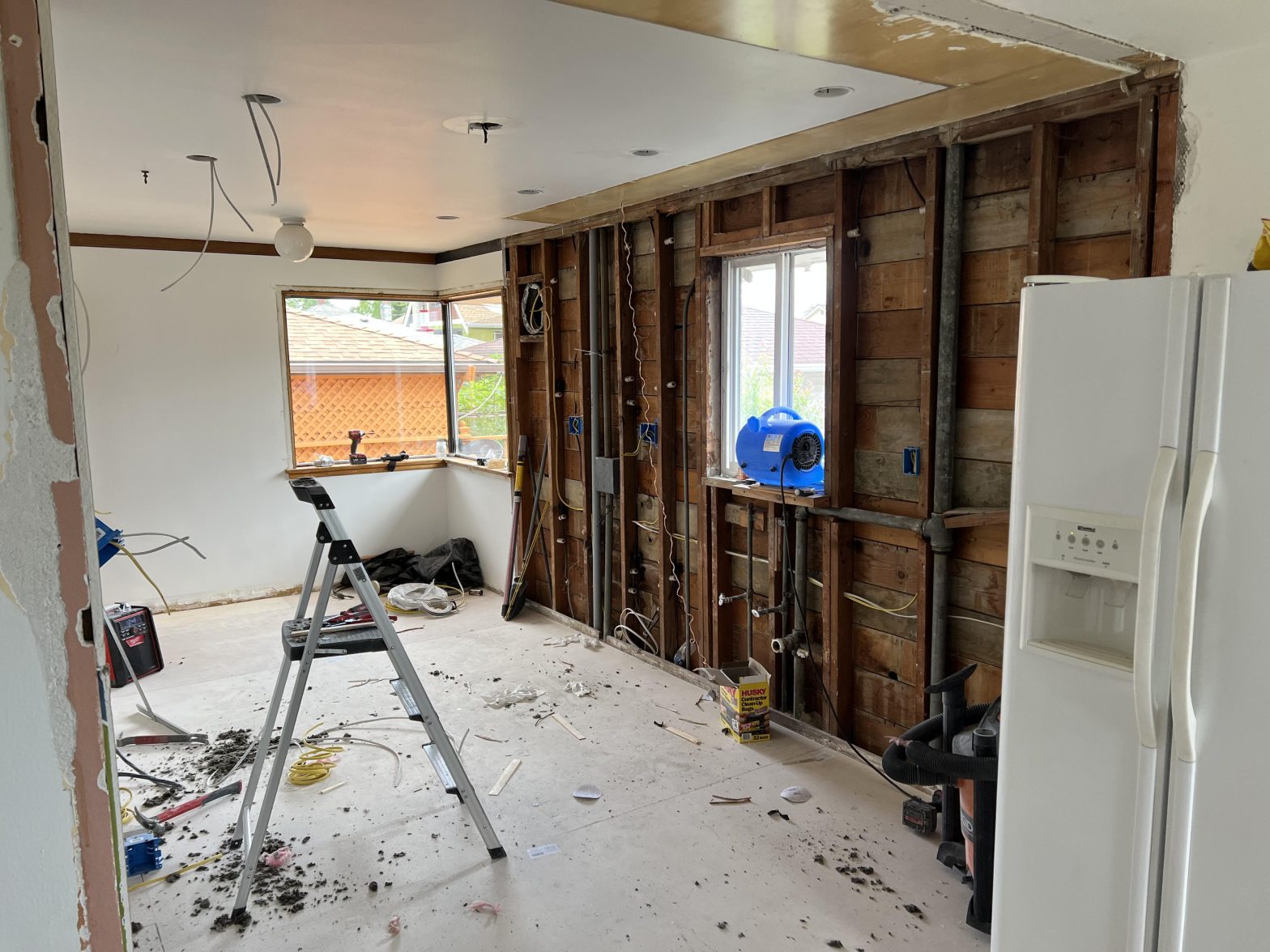
Owning a home in the Tacoma area—especially one with a little age and character—comes with ongoing maintenance. And while some fixes are obvious (a broken fence post, for example), others can be a little murkier. Should you patch that deck or pull it out and start fresh? Is it worth refinishing your porch railings again, or are they past their prime? These are the kinds of questions that many Tacoma homeowners face, especially when trying to keep their homes functional, safe, and good-looking without diving into a full remodel.
Making smart choices about when to repair vs. replace can save money, extend the life of your home’s features, and help you prioritize projects that actually add value. Even better? Many of these mid-sized jobs can be scheduled around larger remodels, making them more affordable and more available for homeowners who act at the right time.
The Real Cost of Choosing to Repair or Replace in Your Home
It’s easy to put off home repairs, especially when things are “still working.” But ignoring small issues can lead to bigger, more expensive problems down the line. Making the right call between a minor home repair and a full replacement isn’t just about budget—it’s about protecting your investment and avoiding the kind of headaches that come from waiting too long.
A rotting porch step, for example, might seem like a small fix. But if moisture finds its way into the structure underneath, that simple repair could turn into a much bigger structural issue. On the flip side, you don’t want to rip out a fence or deck that just needs a little reinforcement or a few new boards. It’s all about knowing when to hold off, when to act, and when to start fresh.
There’s also the question of safety. In many of Tacoma’s older homes, especially craftsman and post-war bungalows, features like original stair railings, support posts, and even siding may no longer meet current code or stand up well to Pacific Northwest weather. That doesn’t mean everything needs to go, but it does mean paying attention and making informed decisions that balance maintaining the structure’s historical charm with safety and practicality.
The smartest home upgrades aren’t always the biggest—they’re the ones that fix what matters, before it costs more.
General Guidelines: When to Repair
Sometimes a repair is all you need, and the key is knowing how to spot those situations before they get worse, or before you commit something bigger. In many cases, minor home repairs can add years of life to everything from outdoor structures like decks and fences to interior features like trim, cabinetry, and doors. These kinds of fixes keep your home functional, safe, and looking well cared-for without requiring a major renovation.
Here are a few signs that a repair is likely the right choice:
- Cosmetic damage only: If you’re dealing with peeling paint, surface cracks, or mild discoloration—especially on fences, siding, or deck railings—a fresh coat of sealant or stain often does the trick. These are the kinds of touch-ups that can be done quickly and affordably, especially during dry summer months.
- Function is still intact: If your fence is straight and sturdy but has a cracked picket or a loose board, a targeted fix makes more sense than a full replacement. The same goes for decks with isolated soft spots, or porches where only the railing needs reinforcement.
- The damage is contained: When issues are localized—like a small section of dry rot or water damage—you can usually isolate the problem area, make a repair, and monitor the rest over time.
- No structural concerns: If the base structure is solid (posts, footings, beams), then fixing surface issues is both cost-effective and low risk.
- Cost to repair is well under 50% of replacement: As a general rule of thumb, if the repair costs less than half of what a full replacement would be—and won’t need to be repeated anytime soon—it’s probably worth doing.
For homes in areas like Proctor or South Tacoma, where aging wood features are common, these types of quick interventions can preserve the original charm while keeping everything safe and sound.

When Replacement Makes More Sense
Sometimes, the smart choice isn’t to patch things up—it’s to start fresh. While repairs can be cost-effective in the short term, there are situations where they only delay the inevitable or even add to your long-term expenses. Knowing when to replace can save you time, money, and future stress, especially in homes that have seen a few decades (or even a century!) of wear and tear.
Here are signs it’s time to lean toward a full replacement:
- Structural issues are present: If you notice sagging, shifting, or compromised supports, whether it’s in a deck, staircase, or flooring system, it’s not worth the risk. Aesthetic repairs won’t address the underlying problem, and continuing to use compromised structures can be unsafe.
- Water damage or widespread rot: Especially in the Pacific Northwest, water can be sneaky. Once it’s inside walls, beneath floors, or under outdoor features, it often spreads before you see visible damage. If multiple areas are affected, replacement is usually more cost-effective than chasing patches.
- Outdated materials or poor energy performance: Drafty doors, inefficient windows (even if you’re only updating trim), or aging insulation may look fine but can hurt your energy bills. Sometimes, replacement is about function more than appearance.
- Repeated repairs over time: If you’ve had to reset the same deck boards season after season, or keep rehanging an interior door that won’t stay square, chances are there’s a deeper issue at play. In cases like these, replacing the underlying structure—or the entire feature—can save you stress, time, and money in the long-run.
- Out-of-code or safety concerns: Features like low deck railings, steep or narrow stairs, and original wiring that no longer meets current safety standards may not just be outdated, but could be hazardous as well. In many cases, replacement is the only way to bring these elements up to code and ensure your home is safe and insurable.
When a replacement is done right, it not only solves the problem—it can also improve the comfort, safety, and curb appeal of your home.
Common Home Features to Assess & Decision Criteria
While the repair-or-replace decision can apply to just about any part of your home, some features tend to wear out faster than others, especially in the Pacific Northwest climate. Whether you’re dealing with an aging deck, an out-of-alignment door, or siding that’s seen better days, it helps to break things down by feature. In the sections below, we’ll walk through some common areas where this decision comes into play, with tips to help you evaluate what’s worth fixing and what might be better off replaced.
Decks & Porches
In the Tacoma area, where rain is a year-round reality, wood decks and porches are especially vulnerable to wear and tear. Even well-built structures can start to show their age after a decade or two, particularly if they weren’t regularly sealed or maintained.
So How Do You Know When to Repair vs. Replace?
Repair if…
- You notice isolated soft spots or loose boards, but the frame and footings are solid
- Railings are wobbly but can be resecured without replacing posts
- Surface wear like discoloration or splintering is the main issue
Replace if…
- The deck feels bouncy or unstable underfoot—this can signal rotted joists or footings
- There’s visible rot along support posts, especially where they meet the ground
- Water damage has spread across multiple sections, or fasteners have pulled away from the house
- The structure no longer meets current safety code (such as inadequate railing height or spacing)
In many cases, a deck can be partially rebuilt, keeping the frame while replacing the surface boards or railings. This is often a good middle ground for homeowners who want improved safety and aesthetics without the full cost of a teardown.
Learn more about how to spot the signs of wear in our article Spring Deck Check

Before

After
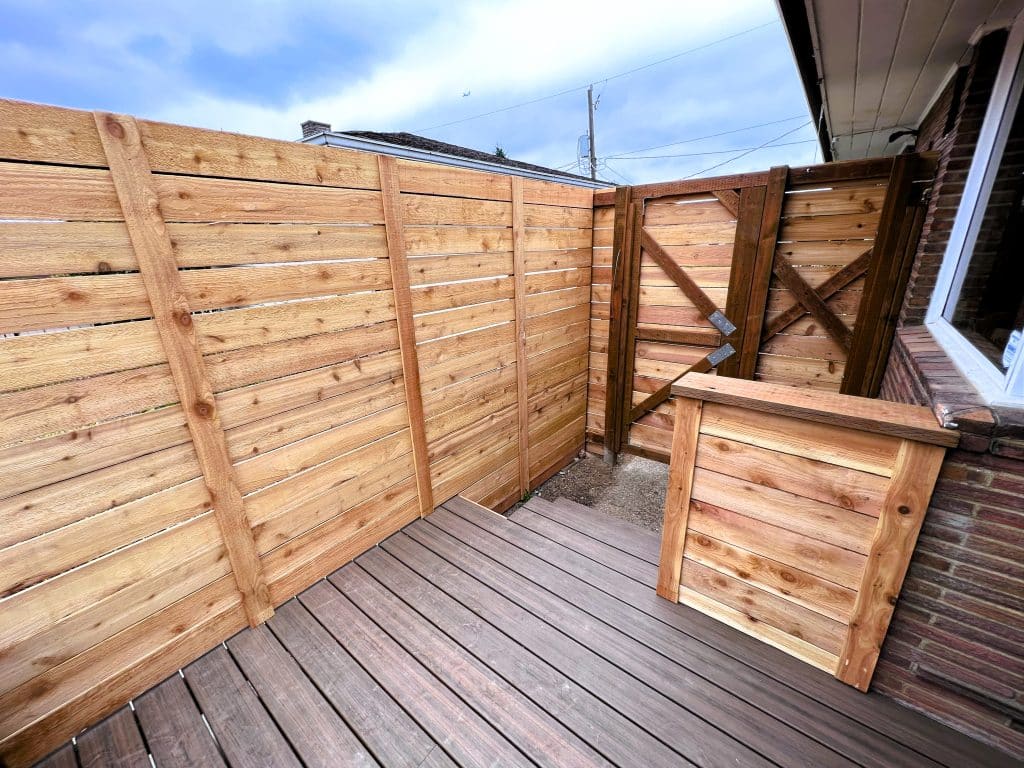
This favorite exterior remodel replaced a worn-out deck and added a custom roof extension and privacy fence, creating a more comfortable space with better curb appeal and year-round usability.
Fencing
A well-built fence adds privacy, security, and curb appeal, but like anything exposed to the elements, it won’t last forever. In neighborhoods like Hilltop or Central Tacoma, many homes still have original or decades-old cedar fences that have started to lean, rot, or lose boards. When that happens, it’s time to weigh whether you can salvage parts or need a full replacement.
Repair if…
- Only a few pickets or panels are damaged, but the posts are still sturdy and upright
- Minor warping, moss growth, or surface staining can be cleaned or sealed
- Fasteners have come loose, but the wood is still sound
Replace if…
- Posts are leaning, wobbly, or showing rot at the base—these are the backbone of your fence
- Multiple sections are failing or repairs are becoming routine
- The overall structure is warped, sagging, or no longer providing real privacy or containment
- You want to switch to a different material or style to better match your home
For homeowners who like their current layout but want a cleaner, longer-lasting solution, a full rebuild using the same footprint is often the simplest route. This allows for upgrades like horizontal cedar slats, trim details, or matching stains that tie into nearby decks or porch railings.
Local Tip: In Tacoma’s damp climate, hidden rot is one of the biggest reasons we often recommend replacement over repair—especially in decks and fences.
Siding & Trim
Siding and exterior trim are your home’s first line of defense against the elements. In Tacoma, that means rain, wind, and moisture almost year-round. Older homes often feature wood siding and trim that can still look great if well maintained, but over time, moisture, sun exposure, and settling can all take a toll.


Repair if…
- You’re dealing with localized paint peeling, surface cracks, or light water staining
- Trim boards are loose or splitting, but not rotted through
- There are only one or two damaged siding boards and matching materials are available
- Caulking has failed around joints or windows, but the surrounding material is solid
Replace if…
- Multiple boards show signs of rot, swelling, or separation from the wall
- The material is old enough that matching it is difficult or no longer available
- You’re constantly repainting or resealing because the surface won’t hold finish anymore
- Water has gotten behind the siding or trim, causing hidden structural concerns
In some cases, homeowners opt to replace trim or siding not just for maintenance, but for energy efficiency, curb appeal, or to transition to a lower-maintenance material like fiber cement. However, in Tacoma’s historic districts, it’s worth checking with preservation guidelines before making significant exterior changes.
If you live in one of Tacoma’s historical homes, check out the City of Tacoma Planning and Development Services for more information about permiting, design planning, and historical preservation.
Roof Extensions & Patio Covers
In the Pacific Northwest, covered outdoor areas aren’t just a luxury—they’re a practical upgrade. Whether it’s a patio cover, pergola, or full roof extension, these features can significantly extend your outdoor season. But like anything exposed to the elements, they require upkeep and sometimes a more serious overhaul.
Repair if…
- The covering structure is sound but needs new roofing panels, fabric, or paint
- You’re dealing with minor leaks or isolated damage to fascia or flashing
- Fasteners or joints have loosened over time but the overall frame is still square and secure
Replace or rebuild if…
- The structure is sagging, shifting, or has rot in key supports
- You want to upgrade to a permanent cover from a temporary or DIY setup
- Water damage is persistent and seems tied to framing or connection points
- You’re planning to convert an upper deck into a partially enclosed space and need to meet current codes
Covered structures also present an opportunity for comfort upgrades—things like integrated lighting, fans, or even outdoor heaters. If the current setup can’t support those additions or isn’t working with your space, starting fresh might be the better investment.
This second-story roof extension added lasting protection and comfort to an otherwise exposed upper-level terrace. With full overhead coverage, recessed lighting, and laminate paneling, the covered balcony now shields against Tacoma’s ever-changing climate to create a seamless extension of the home’s living space.


Windows & Doors
Windows and doors are some of the most used and most noticeable elements in any home. While full window or door replacement typically falls outside the scope of many general contractors, there’s often a lot that can be done to improve appearance, function, and efficiency without replacing the units themselves.
Repair if…
- Trim or casings are cracked, warped, or pulling away but the window or door unit is still sound
- Interior doors no longer close smoothly due to minor settling and need hinge adjustments or planing
- There’s flaking paint, water staining, or worn seals that can be addressed with sanding, repainting, or resealing
- Weatherstripping is failing and causing minor drafts
Replace (parts, not units) if:…
- The structure is sagging, shifting, or has rot in key supports
- Exterior trim is soft or rotting, especially near the sill or lower jambs
- A door or window no longer latches securely, and it’s due to damage to the frame—not just misalignment
- You’re updating other nearby features (like siding or decking) and want to bring the surrounding trim up to match
In many Tacoma homes—especially mid-century and earlier—window and door trim can be ornate or stylistically distinct. Restoring or replacing just the casing or surrounding finish work can give a space a major lift without touching the original doors or windows.
Pro Tip: Sticky doors and windows aren’t always a structural issue—often it’s just a result of seasonal humidity, paint buildup, or minor settling. But if it happens in the same spot year after year, or keeps getting worse, it could mean the framing is shifting or the house is settling unevenly. That’s when it’s worth taking a closer look before the problem gets worse.
Interior Touch-Ups & Built-Ins
Sometimes, it’s the small interior details that make the biggest difference in how your home looks and functions. Trim, doors, built-ins, and staircases often show wear long before they’re structurally unsound. And in Tacoma’s older homes—where nothing is quite square and original features have tons of character—these elements can be tricky to repair or replace without experience.
Repair if…
- Trim has minor dents, scratches, or paint chipping that can be sanded, caulked, and repainted
- Interior doors are sticking or dragging but haven’t cracked or warped
- Built-ins like bookshelves or benches are solid but need a facelift, like new paint, updated hardware, or reinforced shelves
- Cabinet drawers are off-track or hardware is worn out, but the boxes are still sound
Replace or rebuild if:…
- Trim or casing is missing or too damaged to salvage, especially if you’re trying to match original styles
- Doors have been shaved or patched so many times they no longer function properly or fit the space
- You want to reconfigure built-in storage (like adding drawers, open shelving, or closed compartments) to better suit your needs
- Cabinet boxes are warped, delaminating, or no longer holding fasteners
This type of carpentry work often flies under the radar, but it’s incredibly satisfying—and transformative—when done right. It’s also a great candidate for companies to fit into smaller windows of time between larger remodels, which often means they can be accommodated on shorter notice as well. These updates don’t just improve day-to-day use, but also add charm and function without disrupting your whole home.
Interior Staircases & Railings
Older homes often have charming, well-worn staircases—a mix of solid craftsmanship and decades of wear. While these features are often built to last, time, settling, and use can take their toll.
Wobbly railings, squeaky treads, or awkward dimensions are common, but many of these issues can be repaired or reinforced without needing a full remodel. In other cases, repairs may not go far enough, especially when safety or code compliance is on the line. A loose handrail might just need tightening, but a staircase with undersized treads or out-of-date railing height may require a full rebuild to bring it up to modern standards.
Repair if…
- Railings are loose but the balusters and handrail are intact.
- Treads are squeaky or slightly worn but still solid.
- The main issue is cosmetic—paint, stain, or outdated trim.
Replace or rebuild if:…
- The railing height is below current code, or balusters are spaced too far apart.
- Treads are warped, cracked, or visibly unstable.
- You want a fresh look that ties into new flooring or nearby updates.
These kinds of updates aren’t just about looks—they can make a meaningful difference in everyday safety and comfort. For families with small kids, aging parents, or anyone with mobility concerns, a secure, well-built staircase offers peace of mind that you can’t always get from a quick fix.

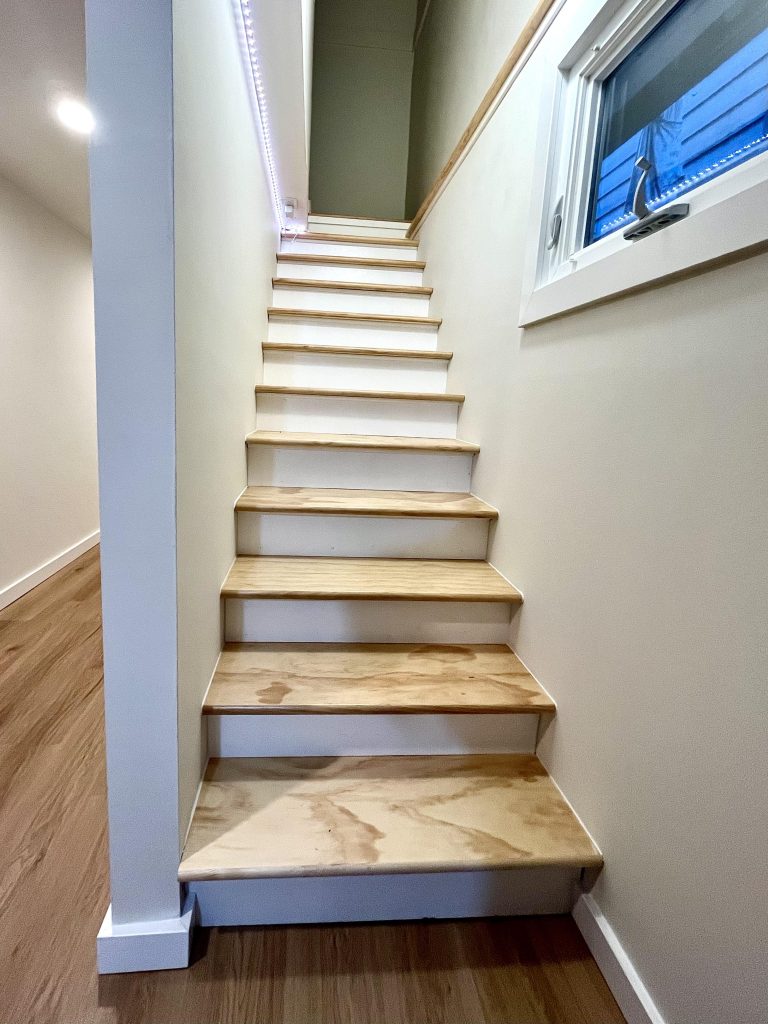
Basement Staircase: Before & After
This stair rebuild was part of a basement renovation that added a living space for two teenagers. The original stairs were narrow and unstable—far from ideal for everyday use. Now rebuilt for safety and comfort, they provide secure, easy access between floors as part of a thoughtful interior stair upgrade.
Baseboards, Crown Molding & Wainscoting
Details like baseboards, crown molding, and wainscoting might not grab attention at first glance, but they quietly shape the entire feel of a room, especially in homes with a bit of age and character. In many older Tacoma houses, though, these features have been pieced together over time, leaving gaps, mismatches, or visible wear from earlier repairs.
Repair if…
- Paint is chipped or the surface has minor dings and gaps that can be caulked and touched up
- One or two boards are damaged, but the rest are intact
Replace or rebuild if:…
- Styles are mismatched between rooms or updates have left gaps in the detailing.
- You want to enhance the room’s character with period-appropriate profiles that match your home’s era, or simply create a cleaner, more polished transition between walls, floors, and ceilings.
This is a great filler project—quick, impactful, and highly visible.
Budget & Timeline Considerations
One of the biggest factors in deciding whether to repair or replace is your budget—and how far you want that budget to go. Repairs are usually faster, cheaper, and less disruptive, but they’re not always the most cost-effective choice long-term. On the flip side, replacements often carry a higher up-front cost but can reduce ongoing maintenance and extend the life of a feature significantly.
Another key consideration? Timing.
Smaller repair or partial replacement jobs are often easier to schedule, especially during peak building seasons when contractors are booked with large remodels. These in-between projects can often be completed quicker than you might think, without the need to relocate or rearrange your life.
For example, a deck surface replacement or fence panel rebuild might take just a few days, but each can dramatically improve your home’s usability and appearance. The same goes for replacing interior trim or restoring stair railings. These are the kinds of jobs that a skilled contractor can fit into gaps between bigger builds without compromising quality.
It’s also worth thinking about how different projects can be phased over time. Maybe this year, you replace the worst sections of your siding or trim, and next year, you plan for a full repaint. Smart sequencing can help stretch your budget without sacrificing quality or progress.
Ask your contractor if your project is a good fit between larger remodels. You might get on the schedule sooner than you expect!
The Betterly Construction Approach
At Betterly Construction, we understand that not every home improvement project needs to be a full-scale remodel. Sometimes, it’s the smaller jobs—those subtle updates or long-overdue fixes—that make the biggest impact on how your home feels day-to-day.
Our goal is simple: To help you make smart, lasting improvements without overbuilding, overspending, or overlooking the details that matter most.
After years of working on Tacoma’s older homes, from early-century craftsman bungalows to post-war cottages, we know how to spot the difference between a simple fix and something that needs a more involved solution. More importantly, we take the time to walk homeowners through their options—offering clear, honest guidance about whether to repair, replace, or do a bit of both.
These kinds of in-between projects often fit naturally into our schedule alongside larger remodels. Whether it’s updating a stair railing, replacing aging trim, or rebuilding part of a deck, we’re equipped to handle a wide range of home remodeling and repair services with precision, care, and a practical eye for what’s worth saving.
Final Thoughts: Start Small, Think Long-Term
When it comes to home improvement, it’s easy to feel like the only options are to do everything or do nothing. But the reality is, many of the most impactful changes start small with smart, well-timed decisions to repair what works and replace what doesn’t.
Whether you’re dealing with an aging deck, worn-out trim, or interior features that are more frustrating than functional, tackling these projects now can save you time, money, and future stress. And with the right help, even modest upgrades can dramatically improve the comfort, safety, and appearance of your home, without turning your life upside down.
At the end of the day, it’s not just about fixing what’s broken. It’s about making thoughtful choices that protect your home’s value and make it a better place to live, one project at a time.
Serving Tacoma, Fircrest, Lakewood, Spanaway, and South Seattle. We provide practical solutions for homes that need a little love, from sensible repairs to more elaborate renovations and remodels.
Have a repair or replacement project you’ve been meaning to tackle?
Home Repairs Before Selling: What Adds the Most Value?
Preparing your home for sale can feel overwhelming, especially when you’re trying to decide wh…
How to Choose the Best Flooring for Your Home
Choosing the best flooring for your home is about more than simply finding a material you like the l…
What Is the Best Countertop Material? Comparing Quartz, Quartzite, Granite, Butcher Block, and More
Countertops are one of the most important material decisions in a remodel, especially in the kitchen…
The Best Home Improvements for Resale in Tacoma, WA: What to Fix Before Listing Your Home
The best home improvements for resale are not always the biggest or most expensive projects. In many…
Wood vs. Composite Decking: How to Make the Right Choice for Your Pacific Northwest Home
Building a new deck is one of the most impactful ways to expand your living space and enjoy more of …
The Most Common Home Repairs in Pacific Northwest Homes (and How to Know When It’s Time to Tackle Them)
Home repairs in the Pacific Northwest are often shaped by the region’s constant exposure to moisture…